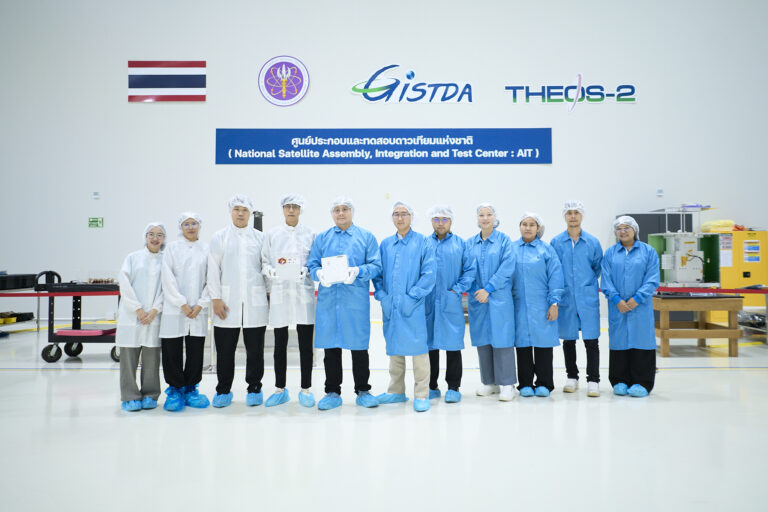

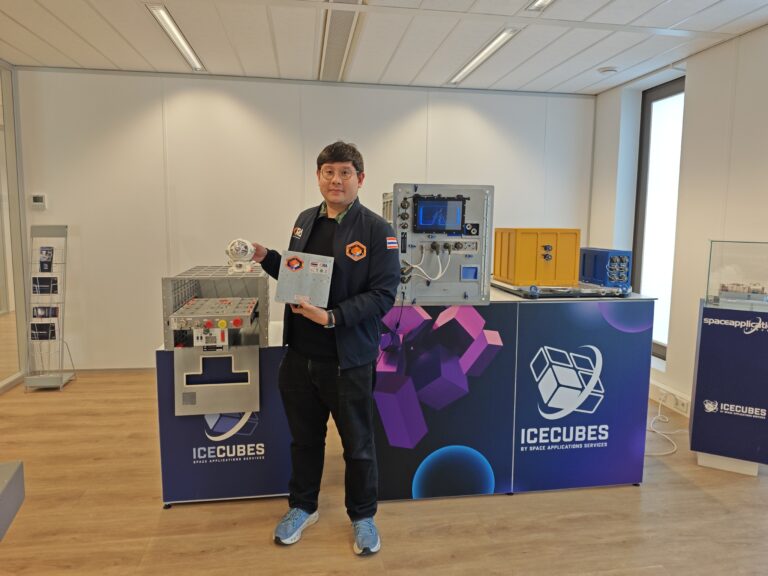
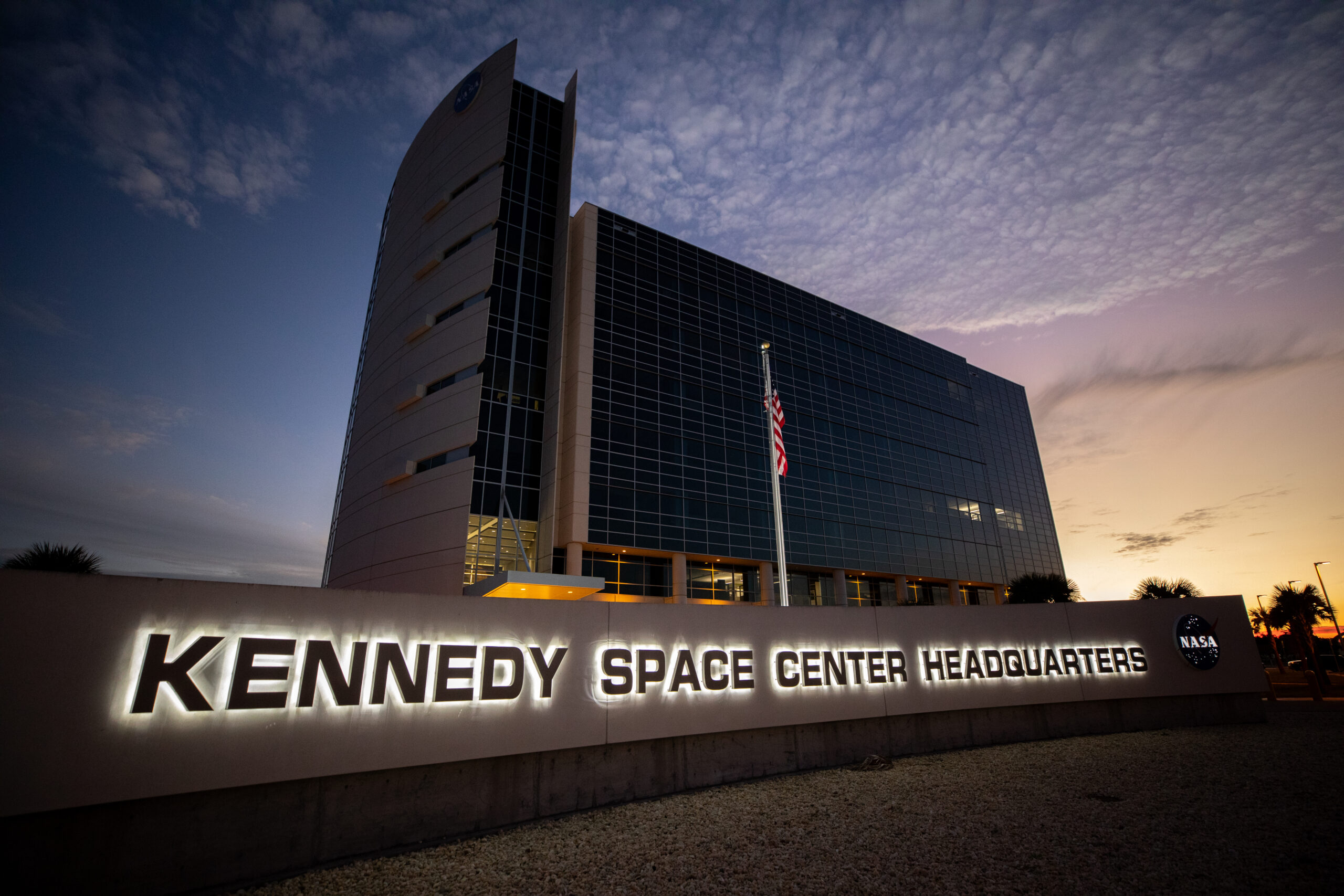
Bangkok, 2 May 2026 — The TIGERS-X (Thailand Innovative G-force Varied Emulsification Research for Space Exploration) payload has successfully arrived at the Space Station Processing Facility (SSPF) in Florida, United States, marking a critical milestone in its final preparation phase ahead of launch to the International Space Station (ISS) aboard SpaceX CRS-34.
The arrival follows the successful completion of a series of international safety certification and verification processes required for all hardware flying to the ISS. The TIGERS-X experiment cube, identified as Experiment Cube #34, has been formally certified under the ISS Flight Safety framework, confirming compliance with NASA and international partner safety standards for transportation, on-orbit operations, and return.
As part of this process, the payload underwent detailed hazard analysis and control verification under the ISS Flight Hardware Standard Hazard Control framework. The system was assessed across multiple risk domains, including material offgassing, mechanical safety, electromagnetic compatibility, thermal limits, and fluid containment. All identified hazards were mitigated and formally closed through analysis, inspection, and testing, confirming that the payload meets the strict safety requirements for crewed spaceflight operations.
In parallel, the TIGERS-X payload received formal security approval from the European Space Agency (ESA) ISS Security Control Board. The assessment confirmed compliance with onboard cybersecurity and operational integrity requirements, ensuring that the system can be safely integrated into the ISS networked environment. While certain operational configurations were identified as necessary for maintenance and contingency response, all associated risks were reviewed and accepted within mission constraints.
From a hardware safety perspective, the payload is classified as low-risk, utilizing non-toxic fluids with Hazardous Material classifications at Toxicity Hazard Level (THL) 0 and Biological Safety Level (BSL) 0. The system is designed as a sealed, self-contained microfluidic platform, with all fluid interactions confined within controlled internal channels. Structural and mechanical assessments further confirm that all rotating components, electrical systems, and thermal characteristics remain within ISS safety thresholds under both nominal and off-nominal conditions.
The payload has also been verified for safe transportation aboard commercial cargo vehicles, including the SpaceX Dragon, under ISS transportation safety standards. This includes validation against launch loads, vibration environments, and containment requirements during ascent and re-entry phases.
With arrival at SSPF, TIGERS-X now enters the final stage of launch site processing, including pre-flight inspection, cargo integration, and encapsulation into the Dragon spacecraft. Launch of the CRS-34 mission is scheduled for 12 May 2026 aboard a Falcon 9 rocket from Space Launch Complex 40 (SLC-40) at Cape Canaveral Space Force Station, United States.
The progression of TIGERS-X through flight safety certification, hazard verification, security approval, and international integration underscores Thailand’s capability to meet the stringent technical and regulatory requirements of human spaceflight missions. Beyond a single experiment, this milestone reflects the transition from experimental payload development to fully compliant spaceflight hardware within the global ISS ecosystem.
About The Mission
The TIGERS-X mission is designed to investigate the fundamental behavior of Total Parenteral Nutrition (TPN) emulsions under microgravity conditions—an area where conventional ground-based research is inherently limited. On Earth, multi-phase fluids such as TPN are strongly influenced by gravity-driven forces like sedimentation and buoyancy, which cause phase separation between lipid and aqueous components over time. In orbit aboard the International Space Station, these dominant forces are effectively removed, allowing fluid systems to be governed instead by surface tension, diffusion, and interfacial dynamics. This shift creates a unique environment where intrinsic properties of emulsions—such as droplet formation, stability, and coalescence—can be observed in isolation, without the masking effects of gravity.
To exploit this environment, TIGERS-X employs a microfluidic lab-on-chip system integrated within the ICE Cubes platform, enabling controlled mixing and observation of fluid behavior without mechanical disturbances. The experiment is structured to generate high-resolution datasets on emulsion dynamics over time, contributing to the development of more stable and predictable formulations. In practical terms, these insights could inform the next generation of intravenous nutrition and drug delivery systems, where stability directly impacts safety, dosing accuracy, and shelf-life. By reframing fluid physics through a microgravity lens, the mission positions itself at the intersection of space engineering and clinical research—treating orbit not just as a destination, but as a controlled laboratory for solving unresolved problems in medicine.