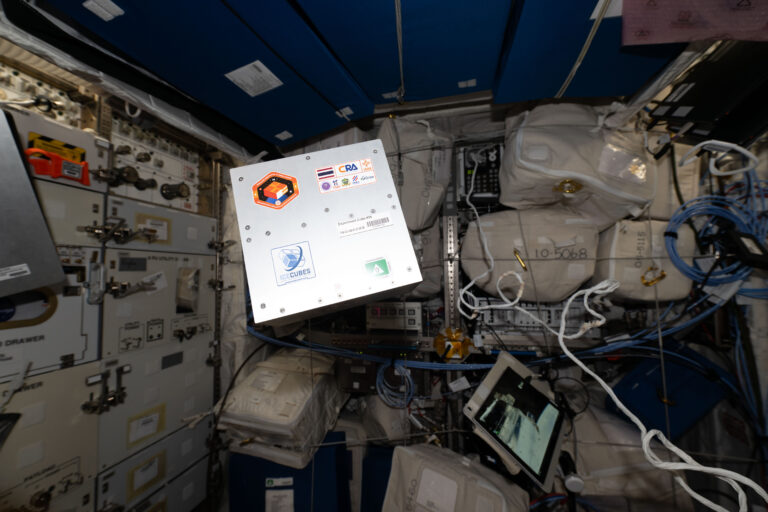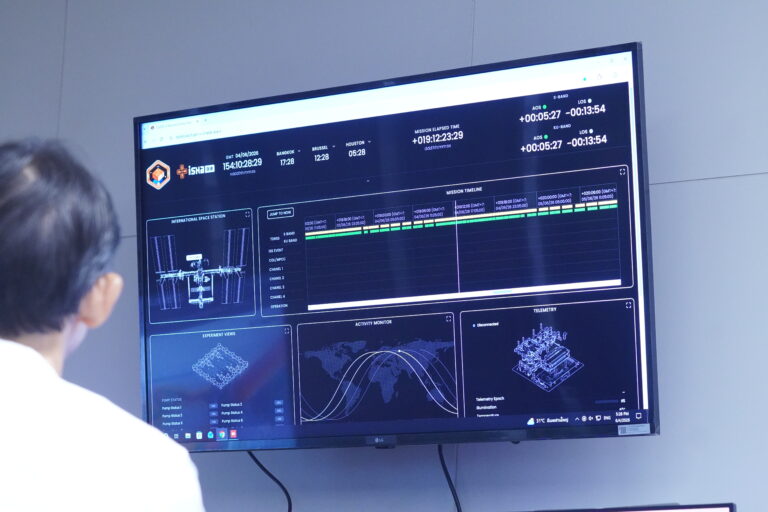

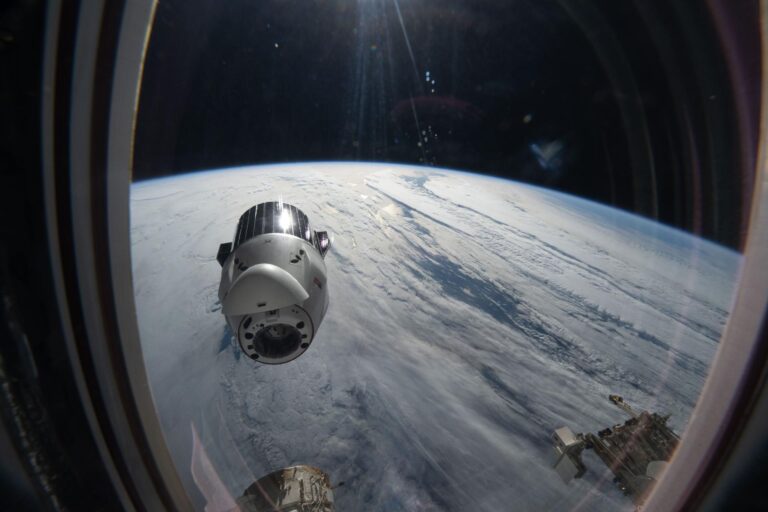
Bangkok, Thailand — The TIGERS-X experiment has been successfully installed aboard the International Space Station and has established communication with its ground control team in Thailand, marking a historic milestone for the country’s space research and mission operations capability.
TIGERS-X, or Thailand Innovative G-Force Varied Emulsification Research for Space Exploration, is a Thai microgravity experiment designed to study fluid behavior and colloidal mixing in space through a compact Lab-on-a-Chip system. The experiment was launched to orbit aboard a SpaceX Dragon spacecraft on May 16, 2026, and arrived at the International Space Station on May 18, 2026. Following docking and cargo transfer operations, the payload was prepared for installation inside the European segment of the station.
On May 26, 2026, at 22:10 Thailand time, ESA astronaut Sophie Adenot installed the TIGERS-X experiment onto the ICE Cubes Facility inside the Columbus laboratory module, the European Space Agency’s laboratory aboard the International Space Station. The installation was coordinated with Space Applications Services, the Belgium-based operator of the ICE Cubes platform.
Following installation, the astronaut briefly communicated with the Space Applications Services team to confirm the status of the system and verify that the payload was properly integrated into the facility. At 23:38 Thailand time, the TIGERS-X ground team successfully established communication with the experiment from Thailand.
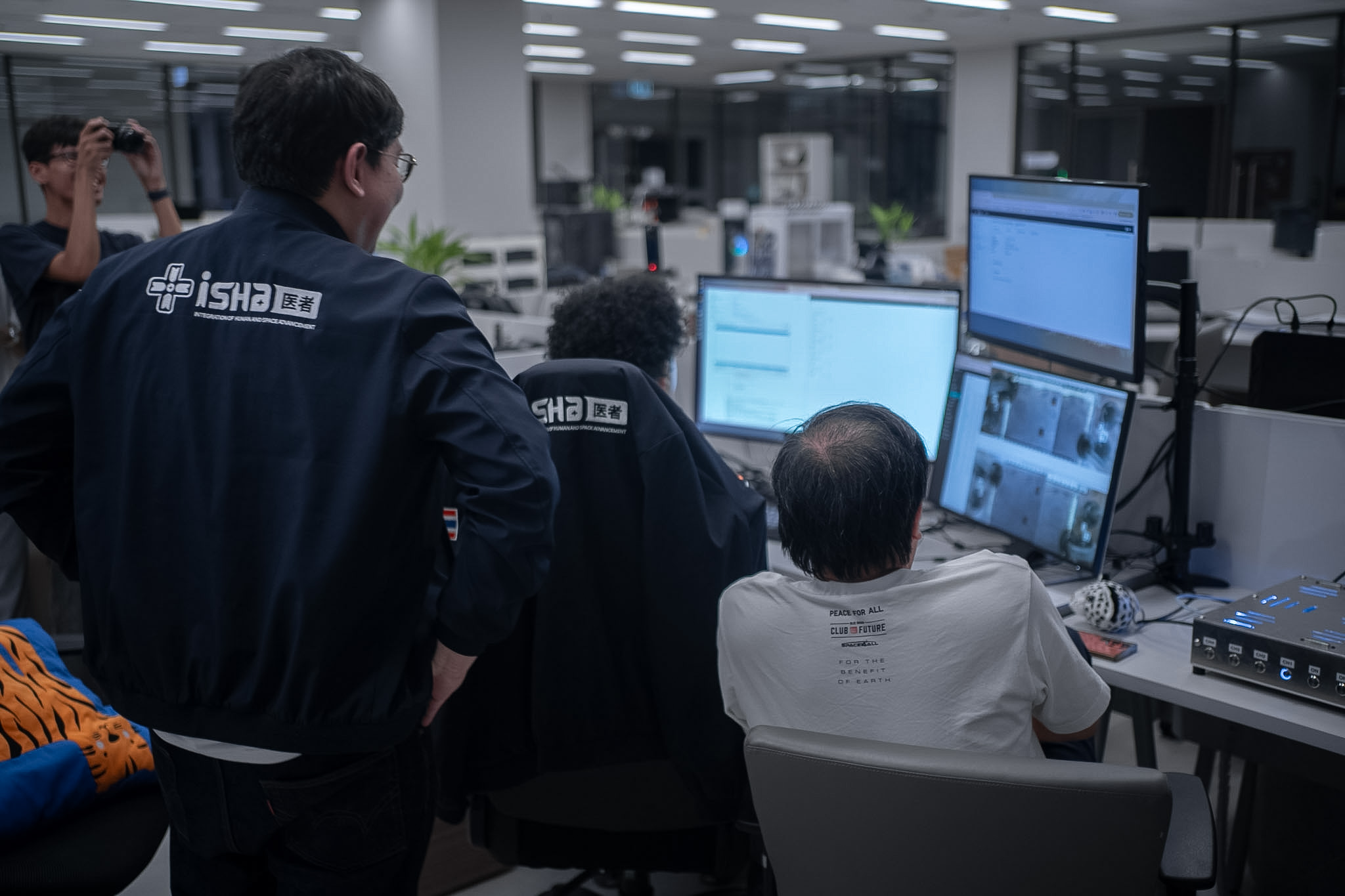
This marks the first time a ground control room in Thailand has directly communicated with an active Thai experiment operating aboard the International Space Station.
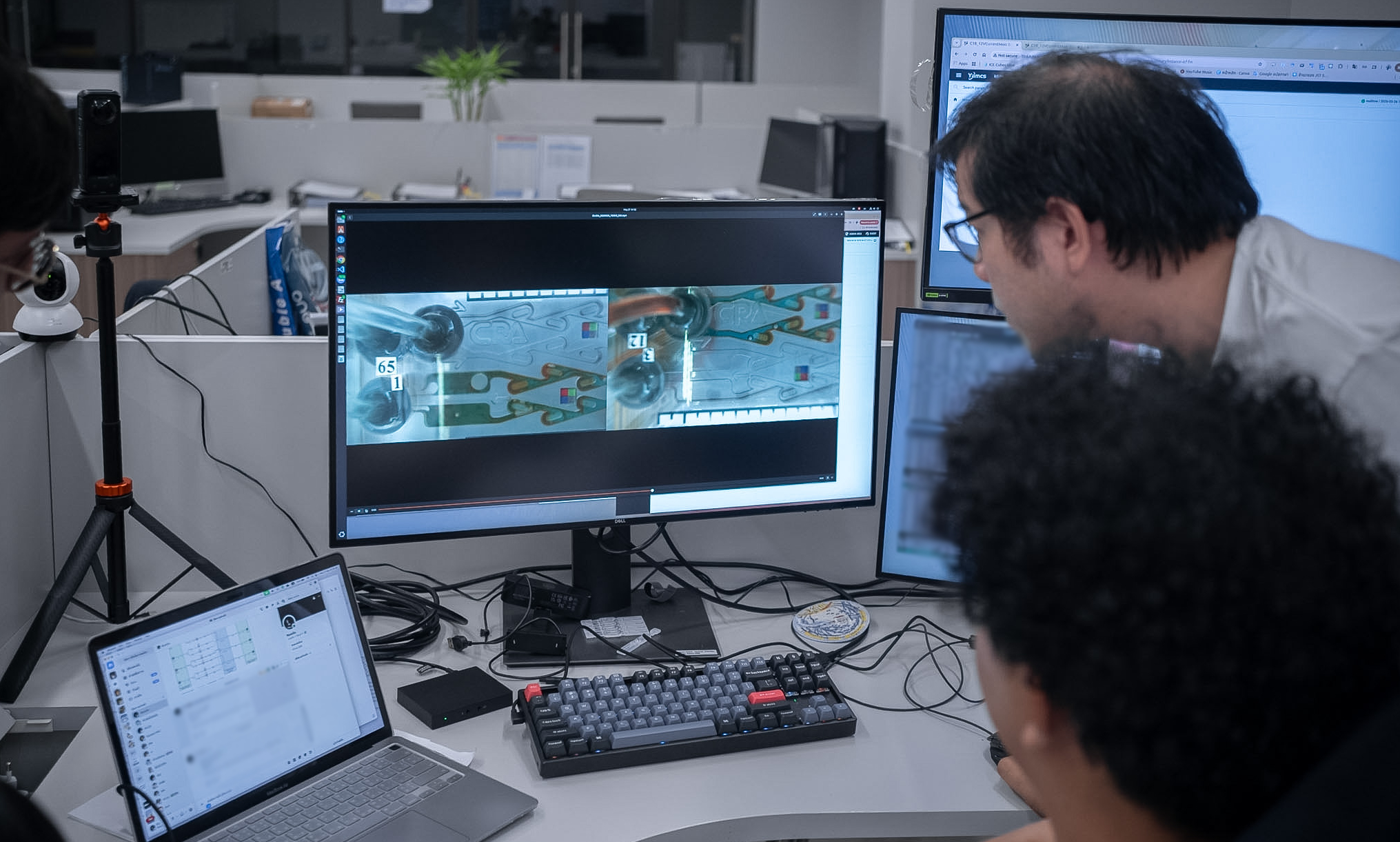
After receiving the first signal, the TIGERS-X team began a series of initial system checks, including verification of the communication link, power system, internal status, and all four onboard imaging systems. The checks confirmed that the experiment was functioning nominally.
The team then proceeded with rehearsal and calibration operations. These included injecting experimental fluid into the Lab-on-a-Chip system and flushing the fluid out to validate system behavior and operational readiness. A total of three sessions were conducted, each planned around available communication windows with the International Space Station. Operations were performed during Acquisition of Signal (AOS) periods, while the system was placed into a safe state during Loss of Signal (LOS) periods.
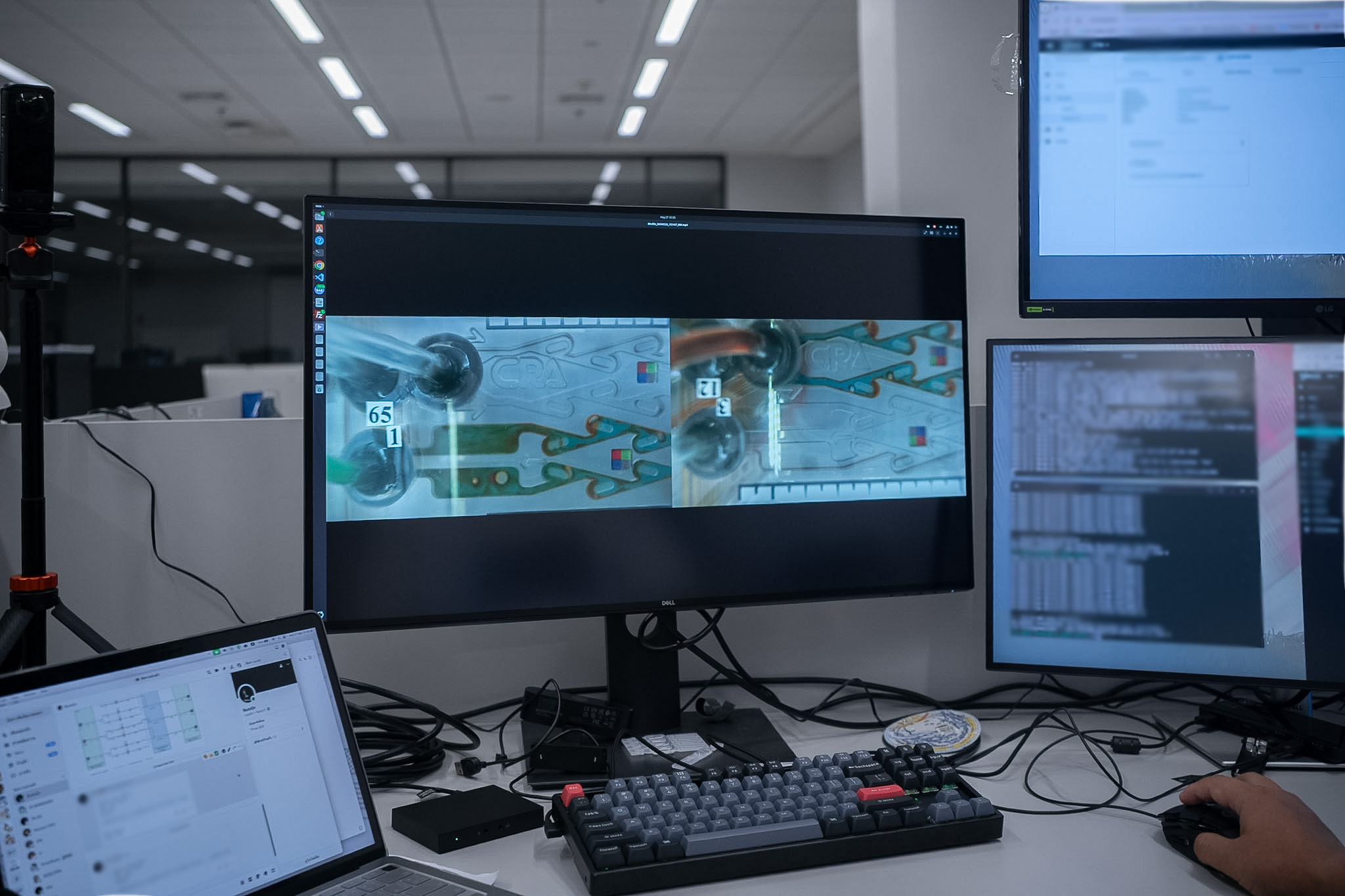
Because TIGERS-X is fully operated from the ground, without requiring astronauts to conduct the experiment after installation, each operational session must be carefully aligned with communication availability, telemetry monitoring, and safety procedures.
The initial calibration campaign was completed at approximately 03:00 Thailand time on May 27, 2026. Preliminary observations showed that the behavior of the fluid inside the Lab-on-a-Chip system was consistent with the team’s assumptions and pre-flight expectations. This successful checkout clears the way for the start of the main science operations phase, referred to by the team as Day 1.
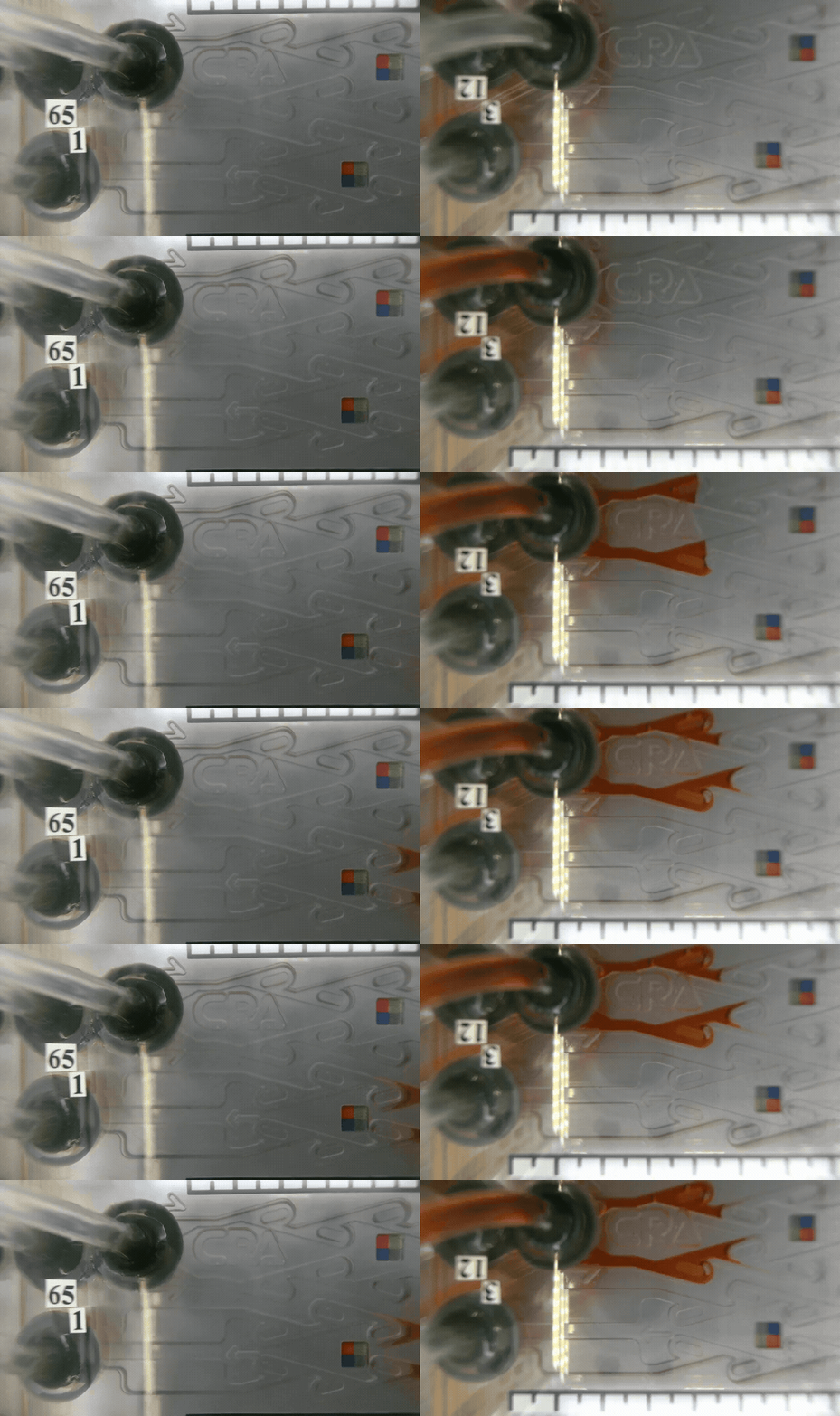
The scientific operations phase is scheduled to continue for six days, during which TIGERS-X will perform a series of automated fluid experiments in microgravity. The experiment is designed to operate without further astronaut intervention, making it one of the most advanced ground-controlled Thai research payloads ever operated in orbit.
TIGERS-X is significant not only as a scientific experiment, but also as a demonstration of Thailand’s growing capability in space mission operations. The payload combines microfluidics, imaging, fluid handling, remote command capability, and real-time telemetry into a compact experimental system designed to meet the strict safety and operational standards of the International Space Station.
The successful activation also follows an earlier technical challenge related to fluid containment and leakage concerns. The team addressed the issue in accordance with International Space Station safety requirements, allowing the experiment to proceed to launch, installation, and operation in orbit.
The successful installation and first contact of TIGERS-X represent a major step for Thailand’s participation in international space research. Rather than simply sending an experiment to space and waiting for its return, the TIGERS-X mission enables Thai researchers and engineers to actively operate a scientific payload aboard the International Space Station from a ground control room in Thailand.
The mission is expected to generate valuable data on fluid behavior in microgravity, with potential relevance to space medicine, microfluidic systems, and future long-duration human spaceflight research.
Media Resource
High resolution images are available on Official Flickr including Zero-G flights, Payload Assembly and Integration, Launch, and Science Operation.