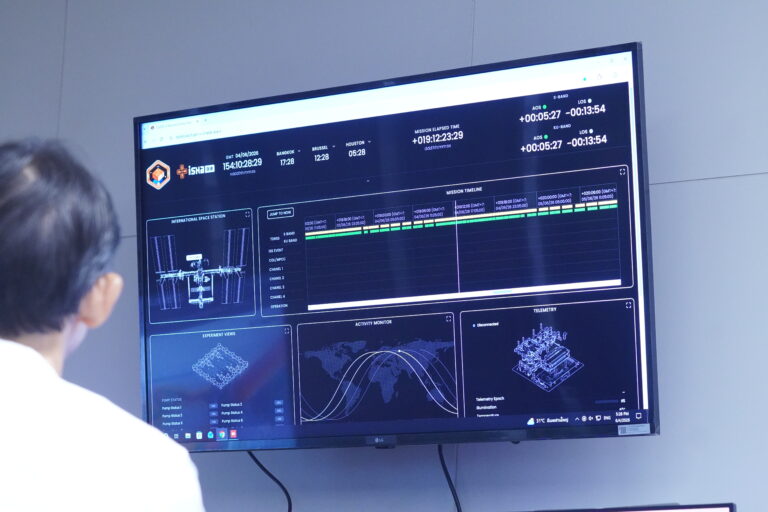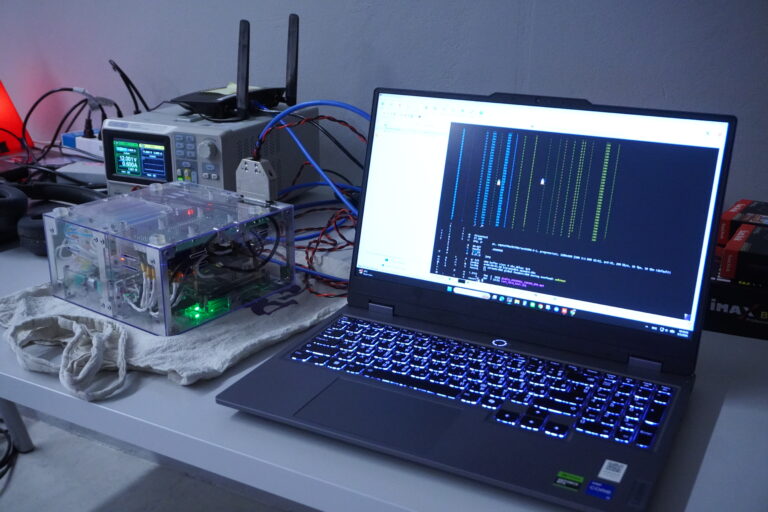

Bangkok, Thailand — The TIGERS-X mission aboard the International Space Station (ISS) has now successfully reached its final day of operation. With communication and planning from our colleagues at the ICE Cubes Service, the research team prepared and executed the final data downlink from our local Mission Control Center (MCC) at Chulabhorn Royal Academy (CRA), making the payload ready for the deactivation of the payload before its removal and return to Earth in the upcoming months.
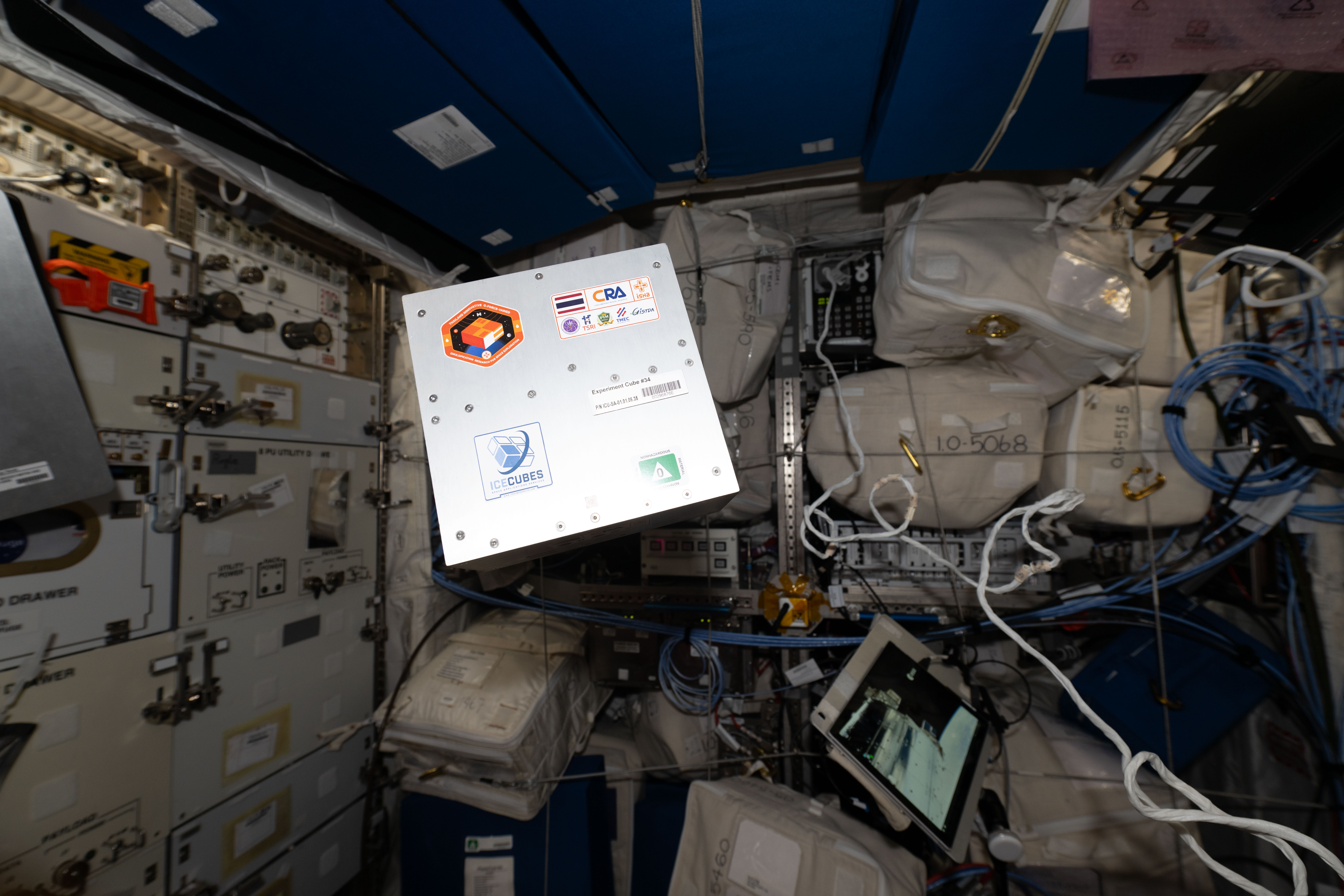
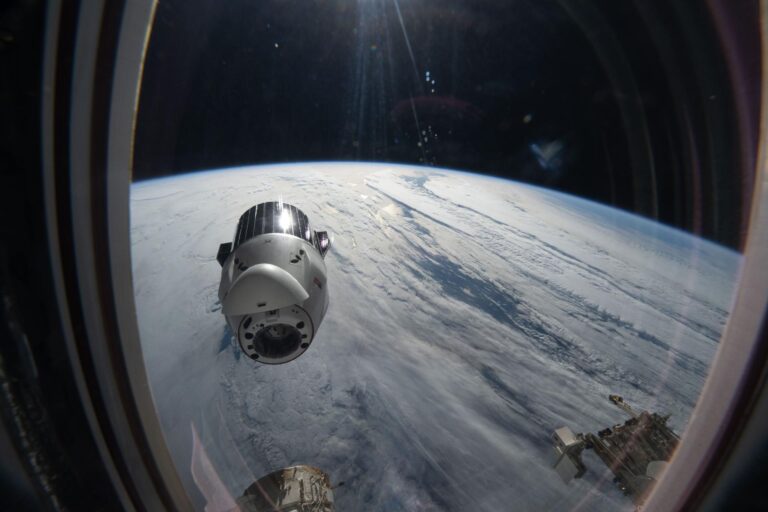
A quick mission timeline recap:
- Launch – 15 May 2026 (22:05 UTC+0)
- ISS Docking – 17 May 2026 (10:37 UTC+0)
- Activation – 26 May 2026
- Deactivation – 5 June 2026
- Splash Down: Approx. mid-June 2026
Since the start of the experiment, the team managed to gather highly critical information to test the hypothesis using the results obtained in real-time from the experiment in orbit, primarily in the form of visual identification based on the recorded video, which was made possible by the ability of the ICE Cubes Facility (ICF) to provide secure, continuous, real-time IP communication from the payload to Earth.
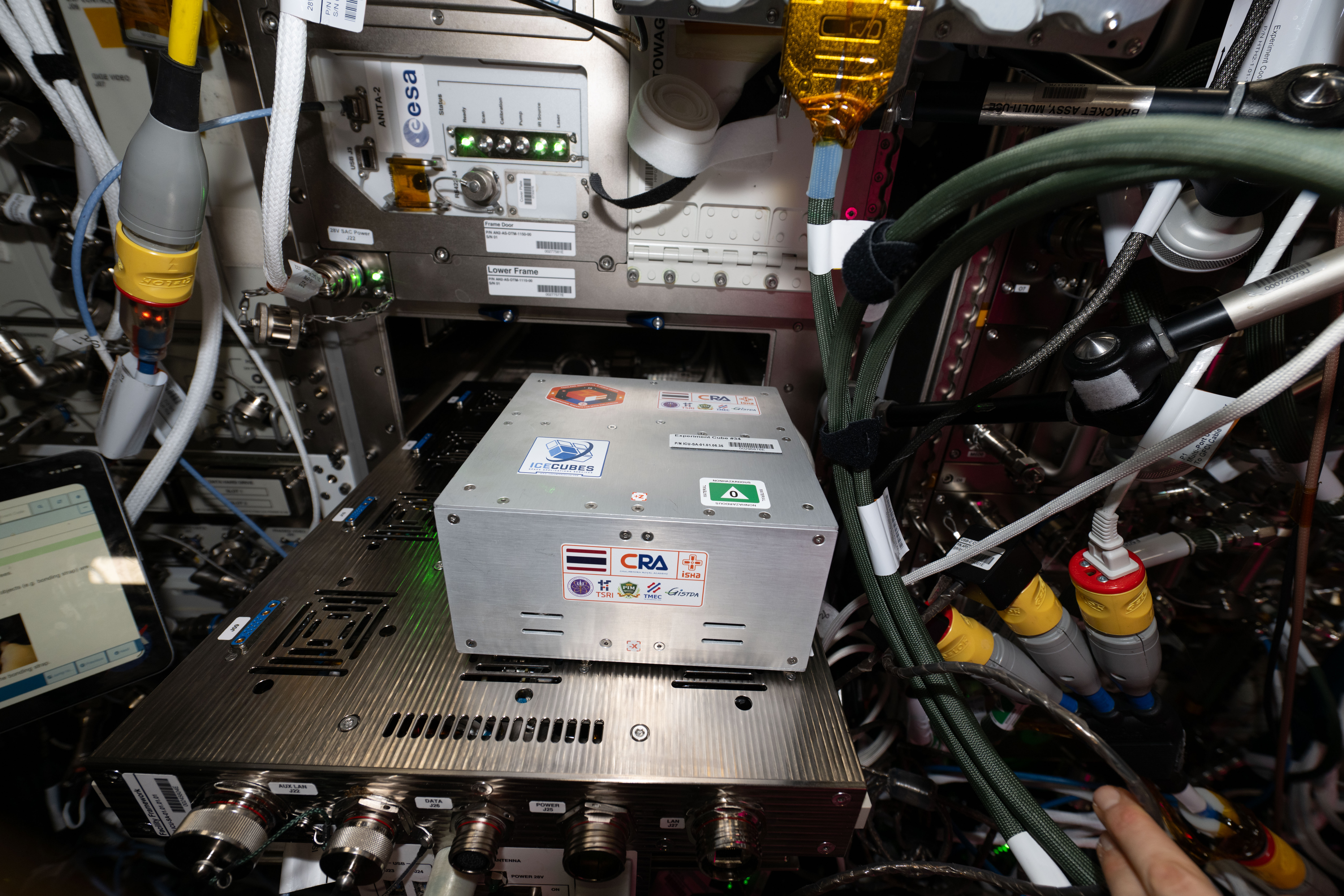
Our achievement:
- First medical payload from Thailand on the International Space Station (ISS).
- First payload on the International Space Station (ISS) with an active Mission Control Center (MCC) based in Thailand.
- First fluid experiment from Thailand on the International Space Station (ISS).
Highlight of Mission Statistic
- From its initial connection and activation to the conclusion of the mission, the TIGERS-X experimental payload operated for a total duration of 9 days, 14 hours, 57 minutes, and 23 seconds (totaling 831,443 seconds).
- A total of 4,342 experimental video files were recorded. Continuous playback of all these files would take 3 days and 22 minutes to watch, amounting to a total data size of 110 GB. Of this, 63 GB of data was successfully downloaded back to Earth for immediate analysis, eliminating the need to wait for the physical experimental payload to be returned.
- All 8 fluid pumps on the experimental payload accumulated a total of 218 operations, running for a combined duration of 15 minutes and 22 seconds.
- Throughout the mission, the payload executed a total of 1,407 commands sent from the ground control center on Earth, resulting in the successful completion of over 218 experiments.
There are some interesting technical challengs during the operational period, but the team has successfully overcome such issues and still performs the experiment within a nominal condition until this last day, with the payload system itself in mostly good condition, proving that the research and development that went into building TIGERS-X is indeed qualified for space standards, especially with enough contingency measures along with hardware redundancy directly integrated into it.
What comes next after the mission’s conclusion is more opportunity for the research team to build upon this great success. Apart from the more in-depth research that is ongoing and will continue well after the retrieval of the payload, the team is now focused on utilizing the results on 3 main aspects:
Science – using the analyzed results to further our understanding of the fluid behavior in a microgravity environment. Further details will be published later on.
Engineering – using the experience gained during the development and manufacturing of the payload to better Thai engineers’ capability to develop space-grade experiment payload, especially employing the benefits of available Commercial Off-The-Shelf (COTS) components to create an economical and modular platform, such as the TIGERS-X payload, which can be improved further in the future for the Lunar mission.
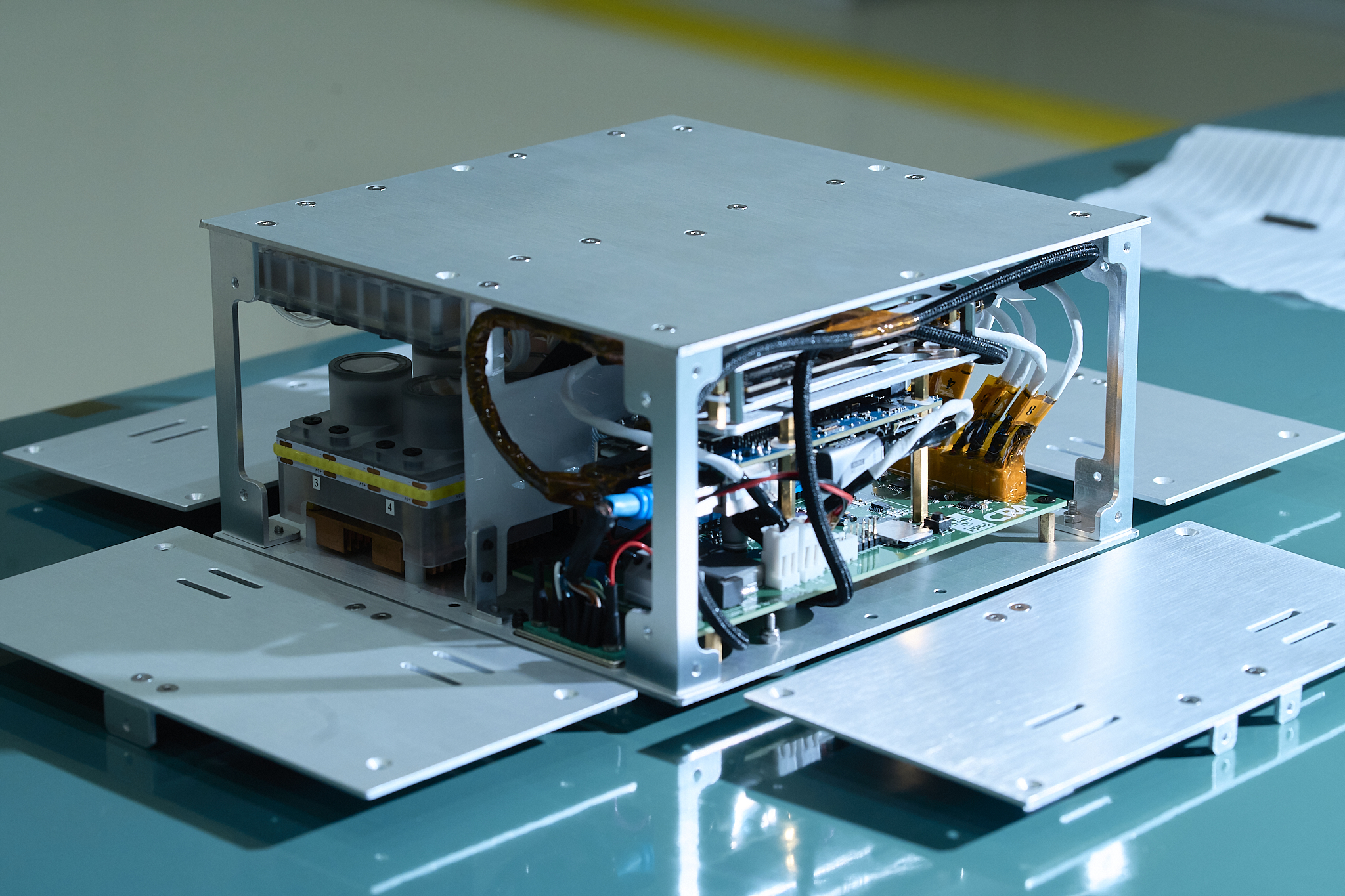
Economy and Human Resource – using space as a platform to build atop Thailand’s currently existing mid-tech industry in the mechanical and electronics supply chain, directly pivoting this foundation to support our transformation to high and frontier technology, using the rigorous standards and qualifications needed in the space sector. TIGERS-X paved the way as a tangible result that could inspire future generations to work in aerospace and creating stronger ecosystem that combines both highly-trained professionals and capital investment in a highly efficient manner.

TIGERS-X’s success is a direct result of the team’s perseverance and determination, a 2-year journey that continues from our previous initiative and is now part of Thailand’s historic achievement in pushing the boundary of space exploration forward.
The TIGERS-X project is led by Princess Srisavangavadhana College of Medicine, Chulabhorn Royal Academy, in collaboration with Panyapiwat Institute of Management, the Thai Microelectronics Center under the National Science and Technology Development Agency, the Geo-Informatics and Space Technology Development Agency, the European Space Agency, and Space Applications Services. The project is supported by research funding from the Thailand Science Research and Innovation Fund under the Ministry of Higher Education, Science, Research and Innovation.
Media Resource
High resolution images are available on Official Flickr including Zero-G flights, Payload Assembly and Integration, Launch, and Science Operation.