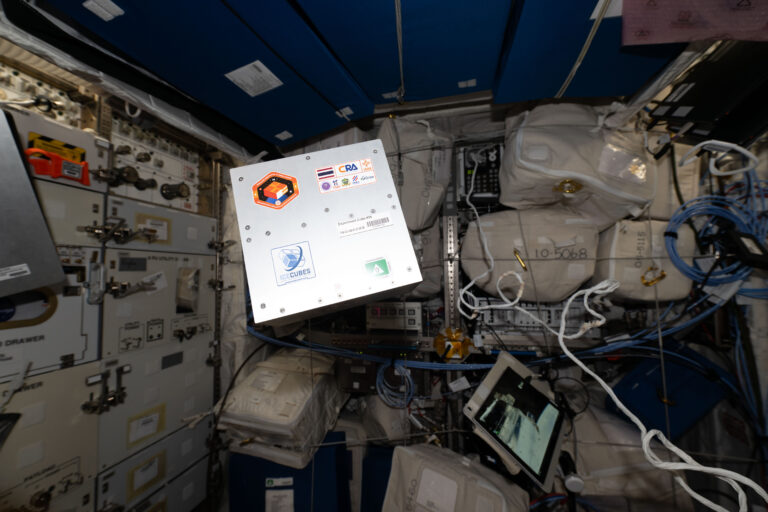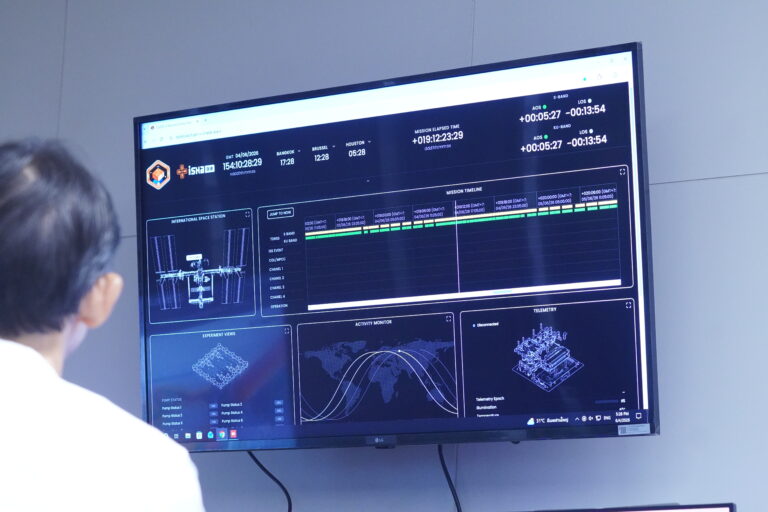

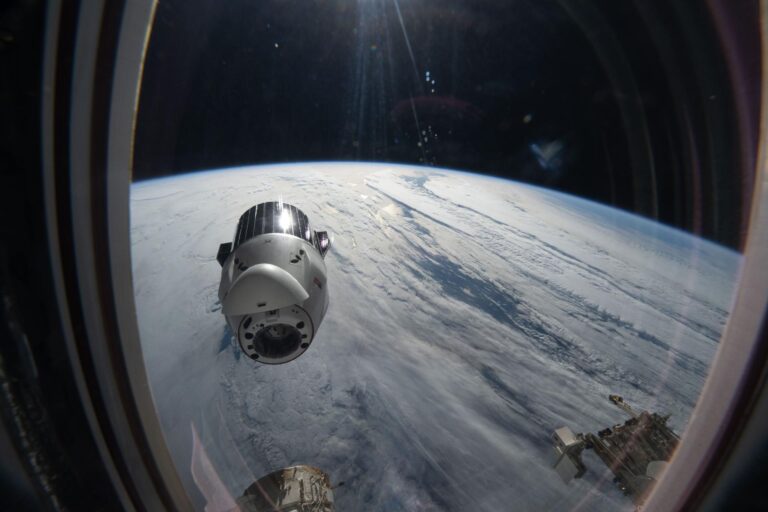
Bangkok, Thailand — On the seventh day of operations aboard the International Space Station (ISS), the research team successfully activated Microchannel 4 for the first time. With this milestone, all four microchannels are now fully operational, enabling the TIGERS-X payload’s complex fluidic system to execute experiments at maximum capacity.
The team maintained its core scientific focus on analyzing the mixing and separation processes of emulsions, alongside the locomotion of air bubbles within the payload. Data recording durations were strategically extended to observe these bubble dynamics in finer detail. Researchers have now classified bubble generation within the experimental setup as a standard systemic occurrence. However, the team is actively accelerating their analysis to formulate a definitive scientific explanation for the substantial volume of bubbles that has persistently formed over the past seven days.
During the day, Space Applications Services issued a warning regarding a potential communication outage between 14:00 and 16:00 (Thailand Time). To mitigate operational risks, the research team preemptively suspended the experiments. Interestingly, systemic checks during this window revealed that the connection to the ISS remained stable. Capitalizing on this, the team swiftly pivoted their strategy, utilizing the uninterrupted connection to aggressively download experimental video files back to the ground station.
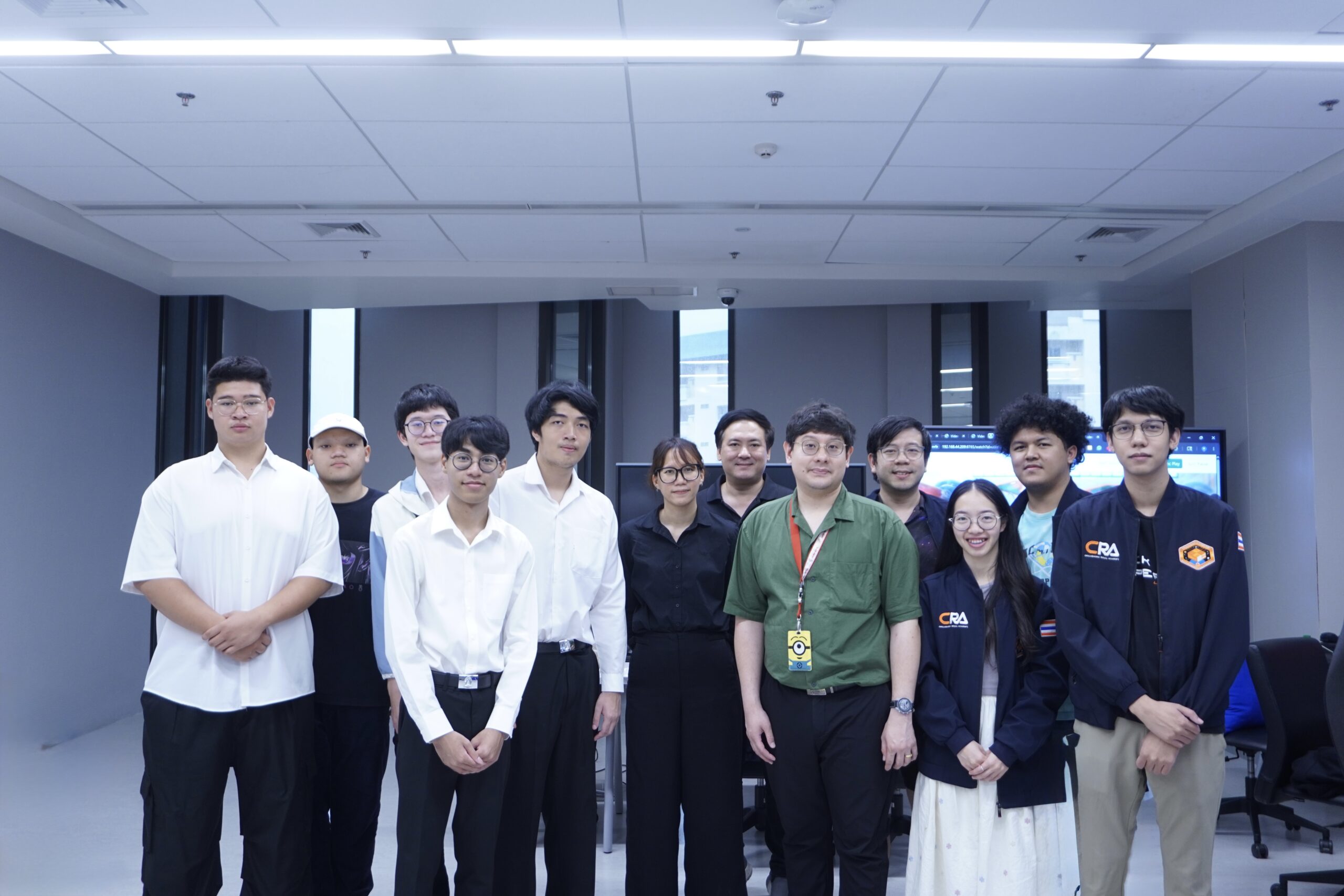
In tandem with orbital operations, the ground control center at the Chulabhorn Royal Academy hosted six young delegates from the Asian Try ZeroG 2025 Supported by a delegation from the National Science and Technology Development Agency (NSTDA) led by Mr. Paritat Theanthong and Ms. Phattra Sappinandana, the visit aimed to inspire.
The youth delegates engaged in comprehensive discussions, diving deep into the payload’s engineering design, software architecture, and the complex communication networks bridging the ISS and ground control. This outreach provided an invaluable educational experience for the next generation of space enthusiasts.
Later in the evening, the research team received an urgent update from Space Applications Services requiring a temporary halt to the payload’s operations. A scheduled power cut to the ICE Cubes Facility (ICF) was slated to occur between 15:00 and 18:00. This power interruption carried a critical risk: the possibility that the TIGERS-X payload might fail to reboot once power was restored.
Treating this as a high-priority threat, the research team immediately conducted a risk assessment and overhauled their mission plan. Preparing for the worst-case scenario, the permanent loss of connection to the payload, the team raced against the clock to downlink all pending data and executed as many critical experimental procedures as possible before the impending power shutdown.
Media Resource
High resolution images are available on Official Flickr including Zero-G flights, Payload Assembly and Integration, Launch, and Science Operation.