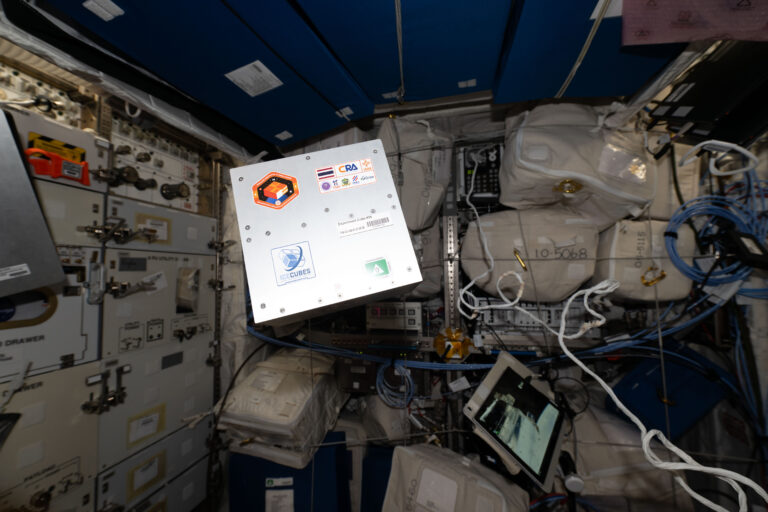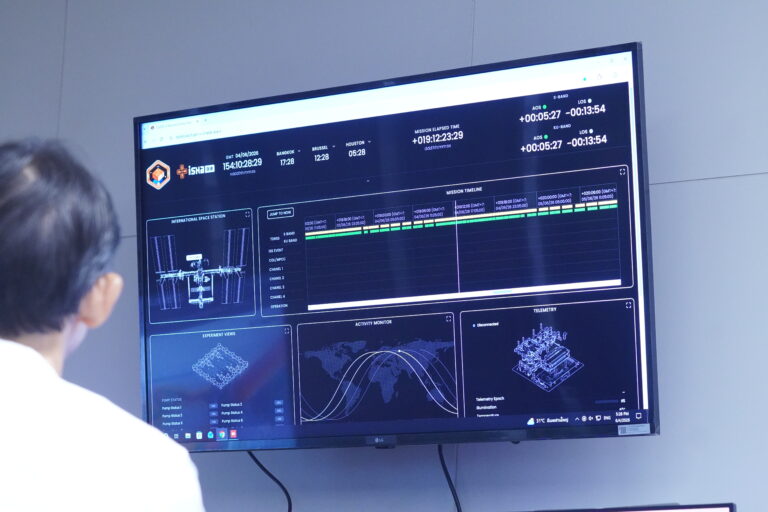

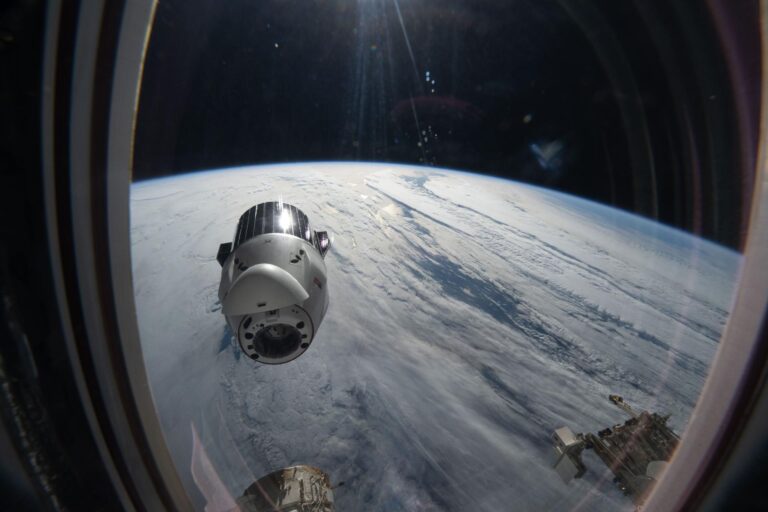
Bangkok, Thailand — Day two of TIGERS-X operations marked the transition into the new Mission Control room, providing greater operational flexibility and allowing VIP guests to observe mission activities directly from within Mission Control.
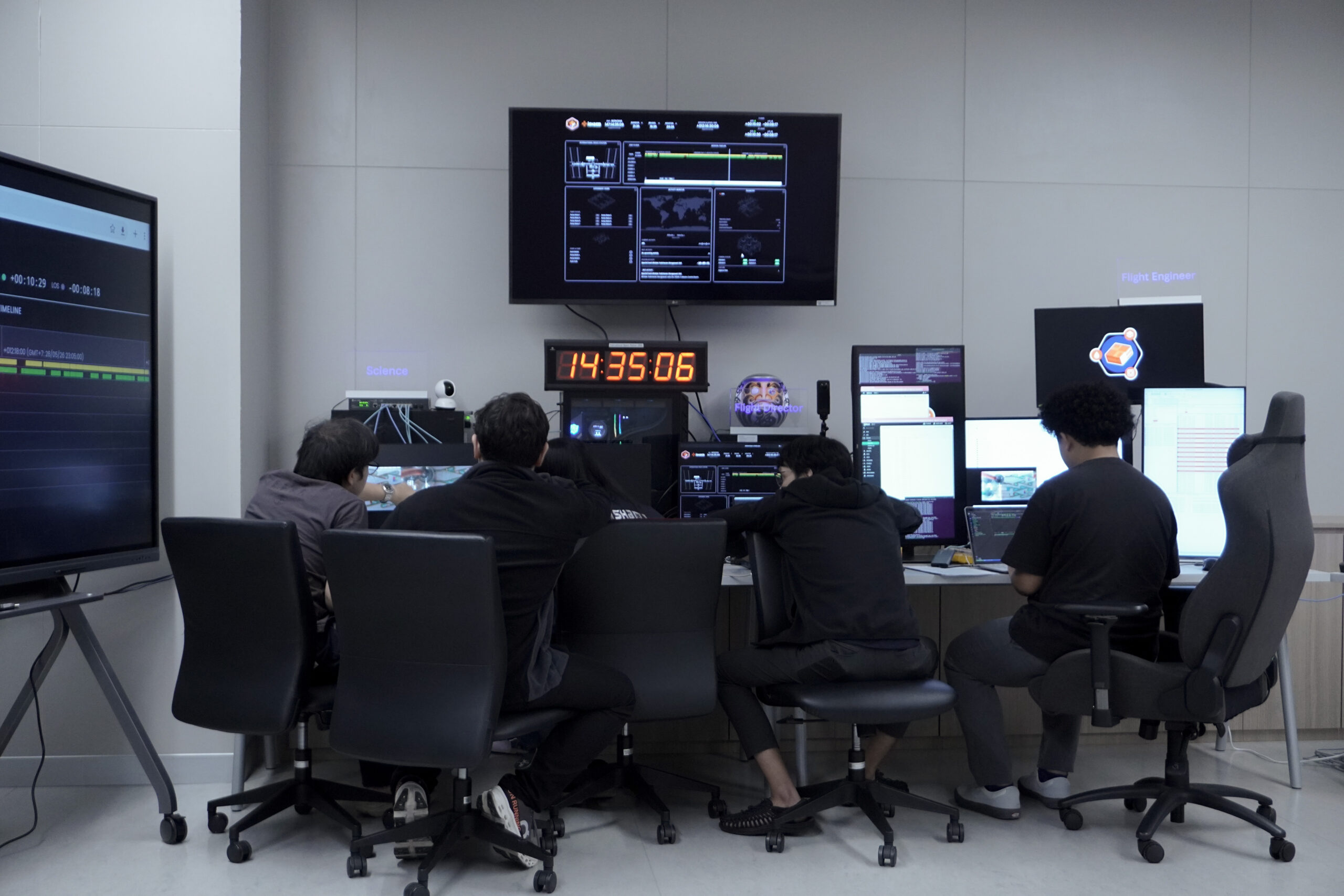
The team began the morning science session focusing on the investigation of the unexpected “backflow” behavior previously observed in Channel 1, where air bubbles had appeared within the fluid system. By attempting to replicate the anomaly through nominal operation procedures, the team identified a possible relationship between the presence of air bubbles and the oil interface inside the system. Multiple hypotheses were proposed to explain the phenomenon, although no definitive conclusion has yet been reached, as the behavior may involve several fluid physics effects unique to the microgravity environment.
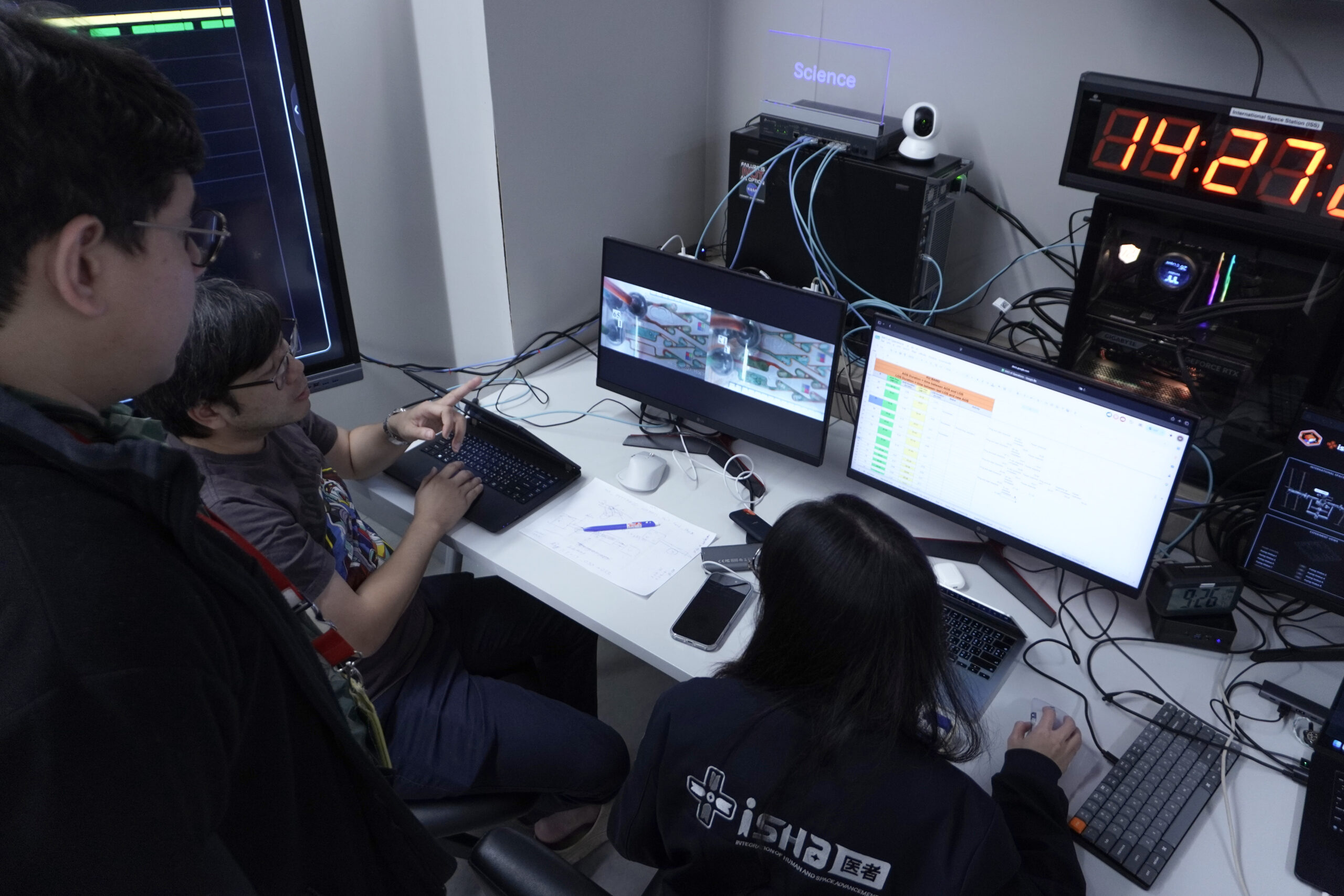
Several hypotheses are currently being investigated by the team to explain the unexpected backflow behavior observed in Channel 1. One possibility is that air originating from the waste bag formed what the team describes as “micro-bubbles” along the oil interface. Due to dominant surface tension effects in microgravity, these micro-bubbles may have been able to travel backward through the system despite the presence of a check valve intended to regulate one-way flow. The team is also investigating whether the check valve itself may permit limited reverse flow caused by internal pressure pulses generated during experiment operations. Unlike a typical open fluid system, where excess pressure can dissipate through venting or safety mechanisms, the closed-loop TIGERS-X system provides only limited pathways for pressure release, potentially resulting in temporary backflow conditions. The possibility of minor leakage within parts of the fluid system is also being considered as another contributing factor.
Another possibility under consideration is that the micro-bubbles themselves may gradually grow larger over time due to fluid behavior unique to the microgravity environment. In zero gravity, the absence of buoyancy-driven convection and sedimentation allows surface tension and capillary effects to dominate fluid dynamics in ways rarely observed on Earth. Under such conditions, small bubbles may merge, accumulate dissolved gas, or remain suspended within the fluid system for extended periods, potentially contributing to the formation of progressively larger bubbles during operation. Interestingly, similar behavior has not yet been observed in Channel 3 operations, suggesting that the phenomenon may depend on specific fluid, geometry, or pressure conditions unique to Channel 1.
During the afternoon, the team held discussions with fluid science specialists to explore additional scientific opportunities arising from the observed fluid behavior in microgravity, which may contribute to future experimental investigations. The remainder of the afternoon was dedicated to downloading, reviewing, and labeling experiment footage, which will support operational planning and science activities over the next several days. Further investigation will continue throughout the coming days of science operations.
Media Resource
High resolution images are available on Official Flickr including Zero-G flights, Payload Assembly and Integration, Launch, and Science Operation.