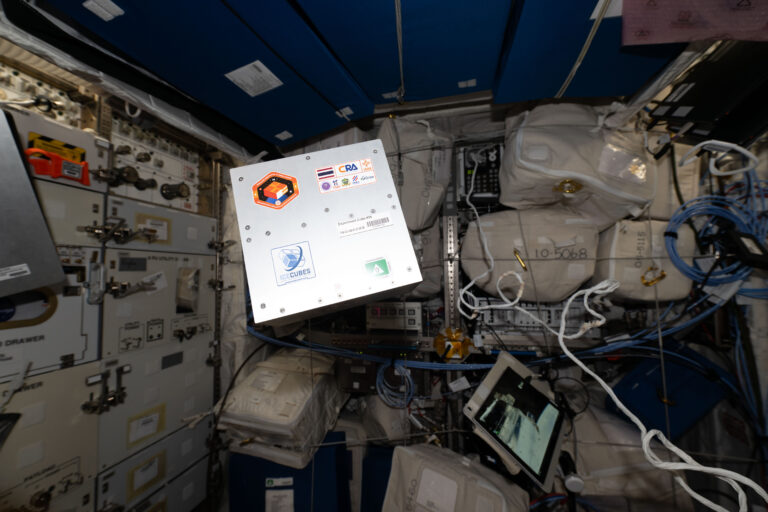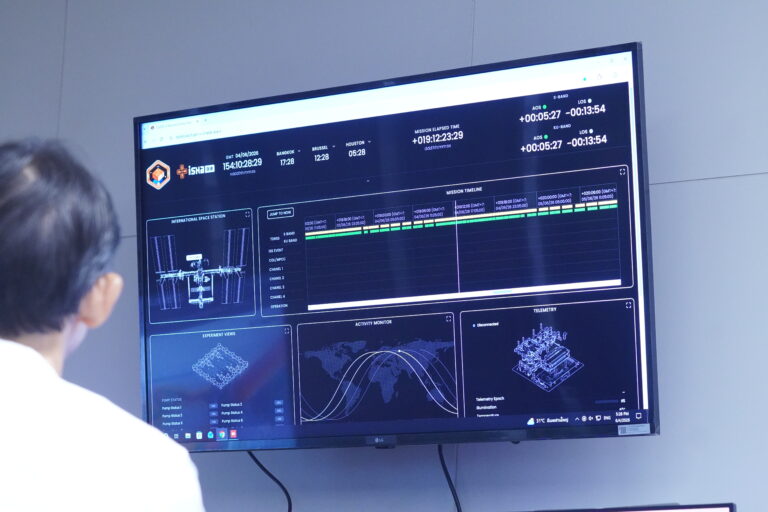

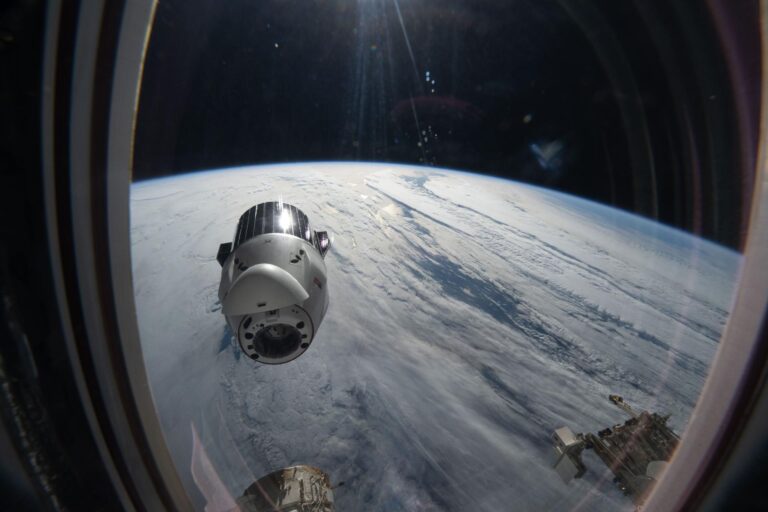
Bangkok, Thailand — Less than 24 hours after payload installation to the ICE Cubes Facility aboard the International Space Station on May 26th, the first day of TIGERS-X operations revealed several unexpected but scientifically important observations, especially in the behavior of fluid inside the system under microgravity.
In the morning, the team experienced a loss of communication between Mission Control and the payload, even though the station was in AOS, or Acquisition of Signal. This led to the scrubbing of the first experiment run. However, connectivity was reestablished almost an hour later.
The team started science operation on Channel 1 of the Lab-on-a-Chip system. The main issue discovered in the morning was the presence of more air bubbles than expected. The team is currently investigating a possible pressure interaction between the waste bag and the good fluid bag, in which the good fluid bag may have compressed the waste bag and caused backflow within the fluid system.
One working assumption is that the system may be experiencing an “air circulation” effect, but this still needs to be confirmed during Day 2 operations.
The team also raised concerns about the “check valve”. A check valve is a one-way valve that allows fluid or gas to flow in only one direction and prevents it from flowing backward. In a fluid system, it works like a “traffic gate” for liquid or gas. When pressure comes from the correct direction, the valve opens and lets the fluid pass. But if pressure comes from the opposite direction, the valve closes to stop backflow.
Although the check valve works perfectly under Earth gravity, it may not behave as expected in zero-g because fluid movement, pressure balance, and bubble behavior are governed by different physics in microgravity. This may be one of the possible contributing factors behind the backflow observed during the first operation.
After Channel 1 was cut off, in the afternoon, the team proceeded with Channel 3 calibration. The oil calibration appeared normal, but the water calibration took significantly longer than expected, around four times longer than planned. This initially raised concerns about a possible leakage issue. However, the problem was eventually resolved, and no signal or communication issue was observed during the operation.
In terms of communication performance, the team also noted concerns about unstable connectivity speed. Although the payload link itself remained available, the data rate appeared to vary at times. This may create operational constraints for longer or larger file downlinks, particularly when transferring image or observation data from the payload.
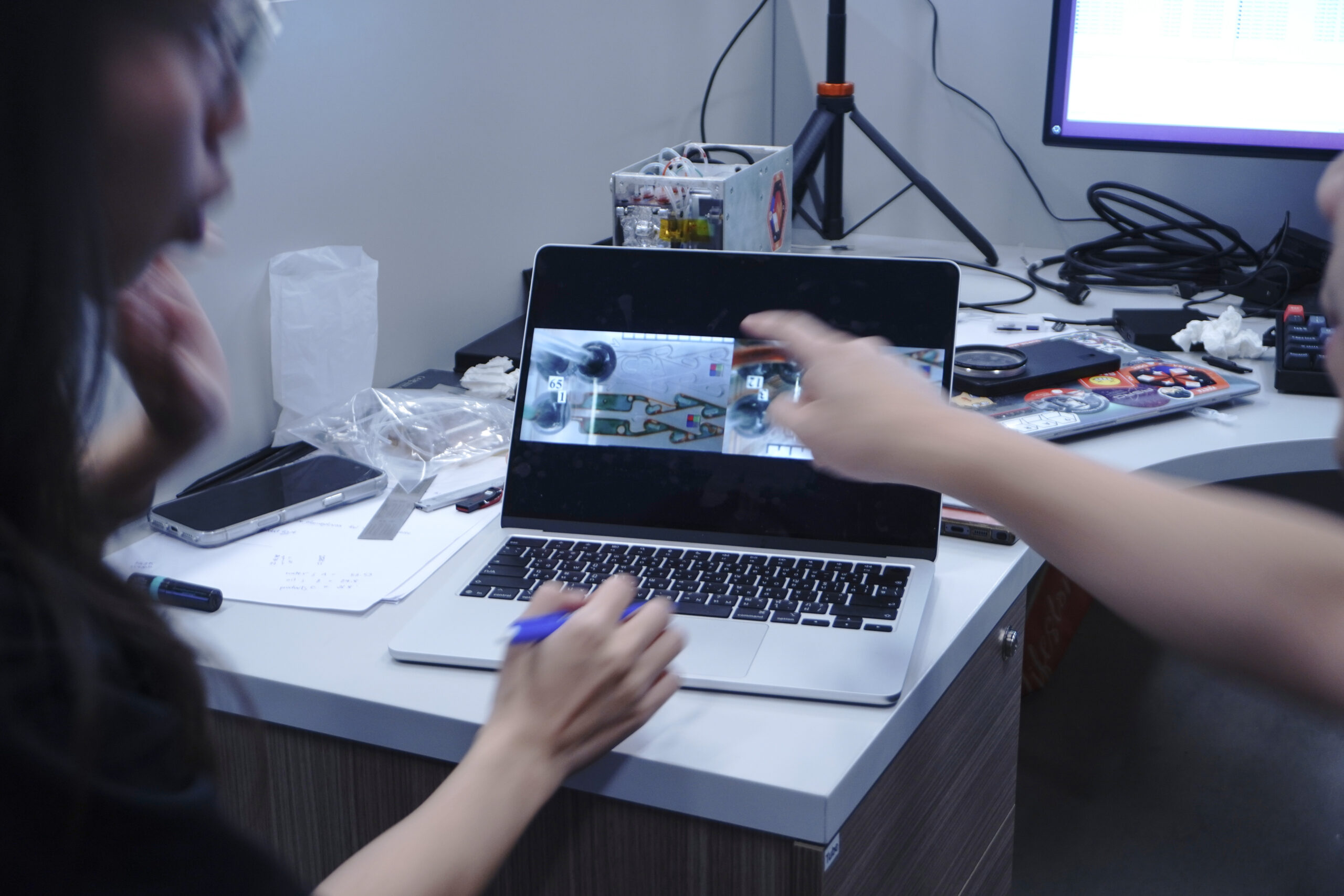
Despite these operational concerns, the first comparison between the ground experiment and the space experiment showed an encouraging early result. The fluid in microgravity visibly appeared to show stronger mixing behavior than the ground control experiment. This is an important initial scientific observation, although the team remains cautious because the unexpected air bubbles, possible backflow, and variable connectivity may affect data interpretation and operational planning.
For Day 2 (May 28th, 2026), the team plans to continue observing fluid behavior, especially any patterns that may be linked to the backflow issue. The team will also work to confirm whether the current air circulation assumption is correct. In the afternoon, Channel 3 operations will continue, followed by a science discussion with fluid physicist based on the first set of observations from Day 1.