
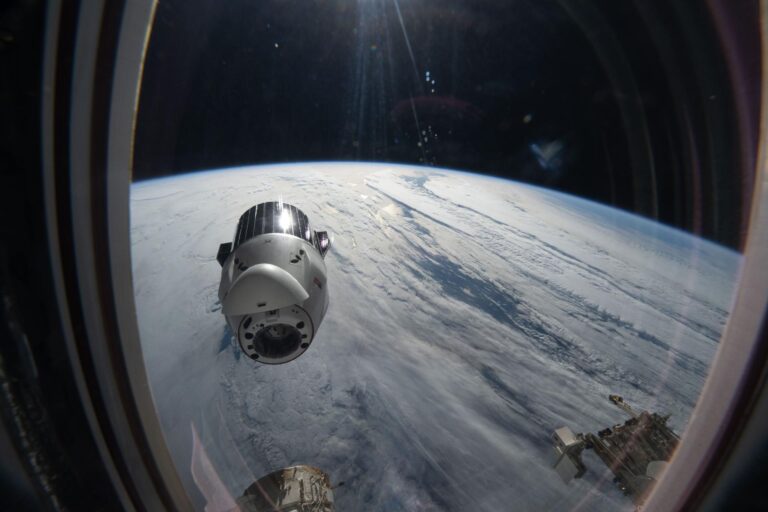
The Dragon spacecraft CRS-34 mission has successfully entered orbit and docked with the International Space Station (ISS) at the forward port of the Harmony module. The docking was completed on May 17, 2026, at 18:00 (11:00 GMT).
The journey took approximately 36 hours in total, following its launch aboard a SpaceX Falcon 9 rocket from Space Launch Complex 40 (SLC-40) at Cape Canaveral Space Force Station in Florida, USA, on May 16, 2026, at 05:05 Thai time Notably, one of the key payloads aboard this mission is the TIGERS-X (Thailand Innovative G-force Varied Emulsification Research for Space Exploration) project, a remote-controlled, in-orbit medical laboratory developed in Thailand.
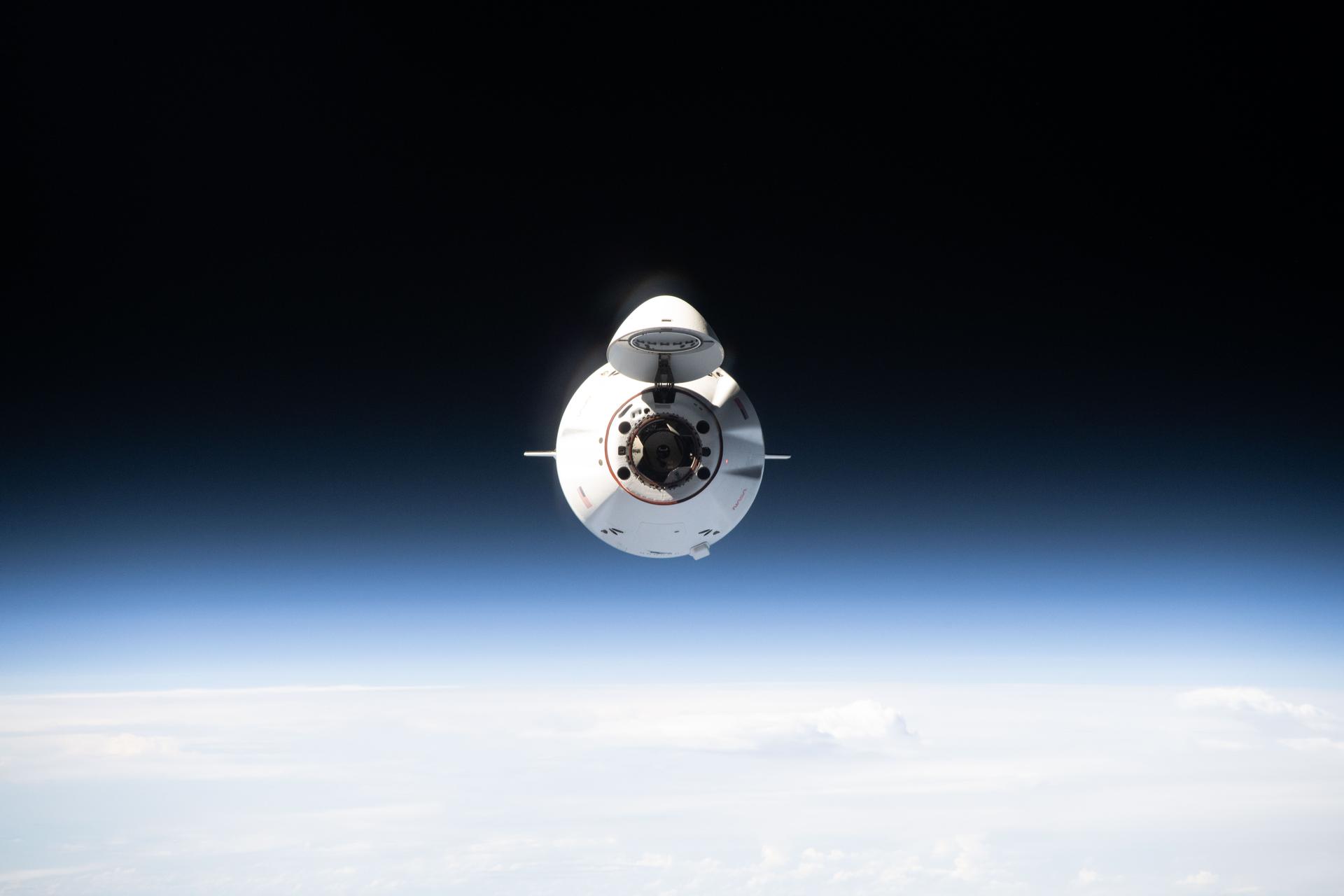
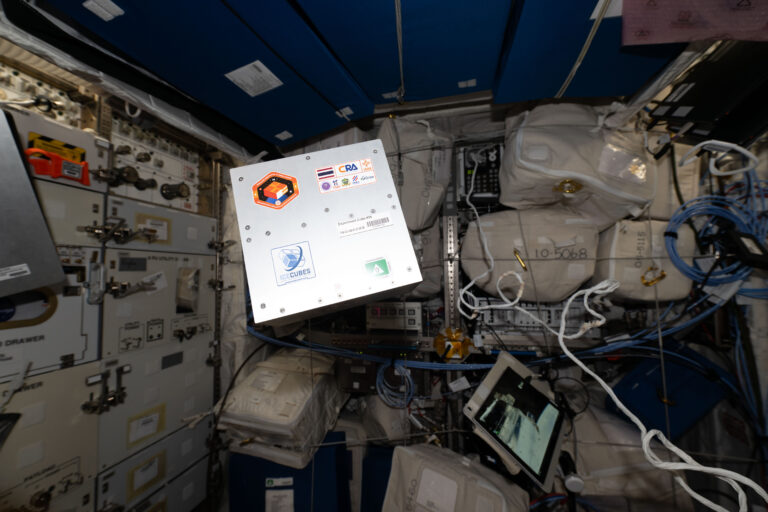
Following the successful docking, astronauts will transfer the TIGERS-X experimental payload for installation on the ICE Cubes Facility (ICF)—a plug-and-play experimentation platform located within the European Space Agency’s (ESA) Columbus module. This will prepare the system for activation and the commencement of scientific experiments according to the scheduled plan.
The TIGERS-X payload will conduct experiments on the ISS for a period of no less than 30 days before returning to Earth aboard the Dragon spacecraft on the CRS-34 return mission.
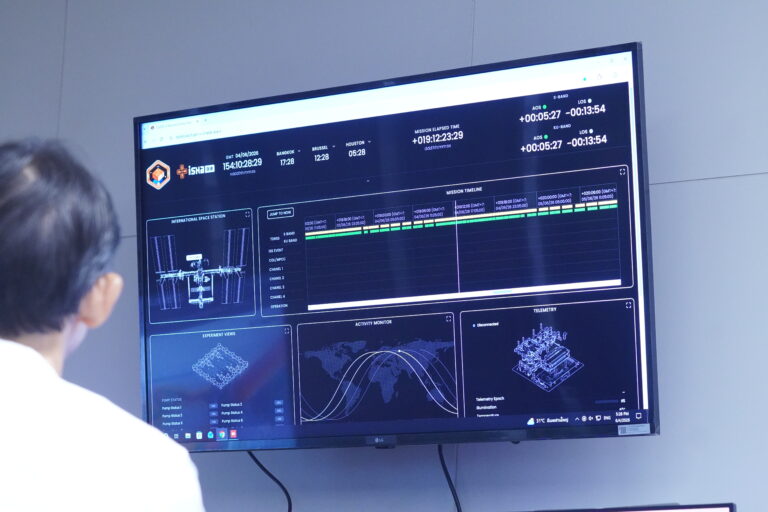
TIGERS-X mission is to study fluid behavior and emulsion mixing under microgravity conditions using the process of “Static Mixing” in Lab-on-a-Chip. Researcher will conduct every operation from ground station in Bangkok. The data obtained from this experiment will serve as an crucial fundermantal science for further research in fluid science, which will lead to applications in the medical and industrial on Earth, as well as the development of technology to support life for long-term space exploration in the future.
The TIGERS-X project is led by Princess Srisavangavadhana College of Medicine, Chulabhorn Royal Academy, in collaboration with Panyapiwat Institute of Management, the Thai Microelectronics Center under the National Science and Technology Development Agency, the Geo-Informatics and Space Technology Development Agency, the European Space Agency, and Space Applications Services. The project is supported by research funding from the Thailand Science Research and Innovation Fund under the Ministry of Higher Education, Science, Research and Innovation.
Media Resource
High resolution images are available on Official Flickr including Zero-G flights, Payload Assembly and Integration, Launch, and Science Operation.